Perspectives from an Agroecological Livestock Farmer
For Belgian livestock farmer Thibaut Goret, “If Europe wants sustainability — environmental, social, economic — it is very simple. You make food with what the land can make, you reduce dependency on the market, and you can raise animals even on land of low agricultural value.”
His clarity is born of experience both in farming and in assisting transition to agroecological farming, and such optimism is timely. Livestock is moving up the EU policy agenda: in the Strategic Dialogue on the Future of EU Agriculture, 29 stakeholders called on the European Commission to tackle the negative impacts of intensive livestock farming and develop a dedicated livestock strategy. The Commission subsequently launched a Livestock Workstream, with a strategy outlining more sustainable and territorially adapted production models expected for publication on 7 July 2026. You can read Agroecology Europe’s contribution to the Livestock Strategy here.
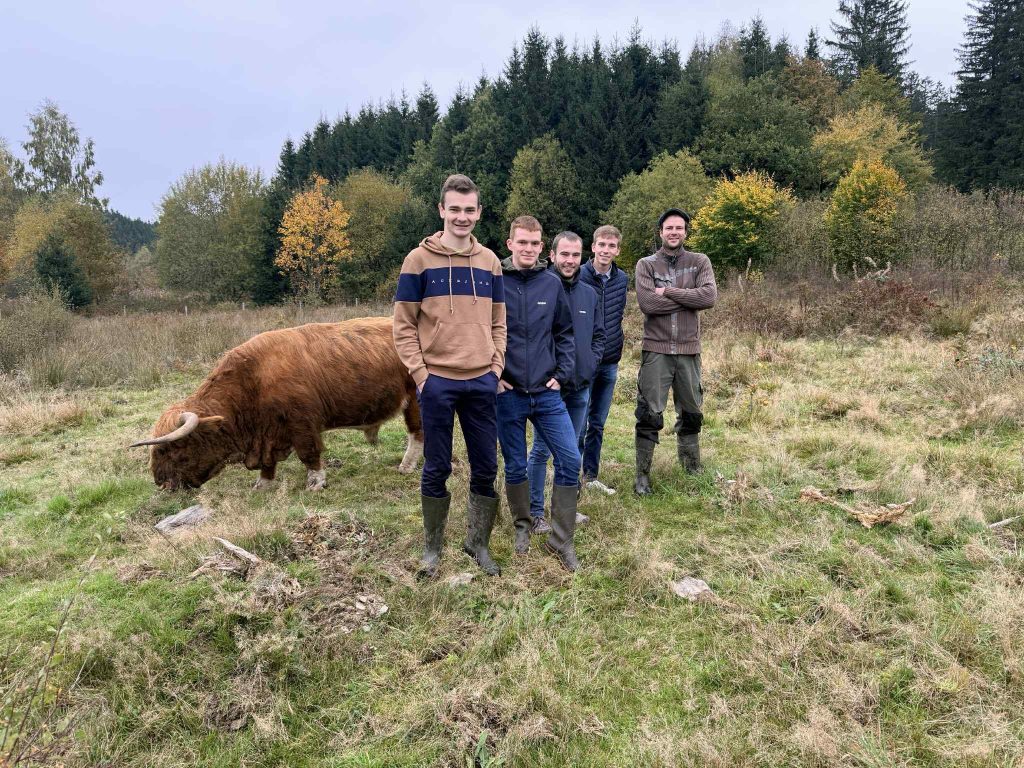
But away from the policy debate, some livestock farmers have been quietly practicing sustainable approaches for years. Thibaut Goret is one of them, he farms Parthenaise cattle on the 50 hectare La Ferme des Reines des Près in Feschaux, southwestern Belgium, and he also assists farmers to convert to agroecological methods in the Entre-Sambre-et-Meuse National Park. Thibaut sees reasons for hope: of the young people turning to farming, the majority wish to pursue agroecology, since in his words, “Agroecology is not ideology. It is autonomy, it is balance, it is fertility of the soil, and it is a normal life for farmers.”
Thibaut exudes positivity, but he points to a disturbing trend: “The number of farmers in Wallonia has shrunk from 120,000 farmers at the beginning of the last century to 12,000 currently.” Pastureland in Wallonia has shrink from 60% to 40% over the last 50 years, and that surviving pasture has been subject to a process of intensification:
“Before, most farms in Belgium practised mixed farming, and that was very important for the fertility of the soil. One century ago, all the farms around here were agroecological: all the farms were organic by default, and extensive, and they didn’t use petrol or buy food from far away.”
Today’s pastures in Wallonia are suffering the impacts of climate change: “We have had seven years of ‘calamity’ in the last 10 years. Seven of 10, it’s incredible. Calamity means that you produce at least 30% less than in the average year. Six years of drought: very, very severe drought, and one year with too much rain.”
Thibaut’s management of his farm offers reinterpretations of the meaning of “resilience” and “future-proof”, key concepts used in the Vision for Agriculture and Food. The resilience of extensive farms is evidenced in their ability to cope with increasing droughts and floods:
“When my neighbours, who farm more intensively with two cows per hectare, experience calamity years they have to give the coming winter’s hay already in June or July, they have to give it for two or three months of summer. In only two of those seven years have I also had to give hay, but for the other four years I had sufficient grass despite the drought. And when I did give hay in summer, I didn’t give it for two or three months like my neighbours, but only for one month in September. When they give 30% of the coming winter’s hay during summer, they then have to buy hay from other places. When I give hay in summer, I only use 10%, and in only one year of the six dry years did I have to buy hay. Over the last four or five years, with the war in Ukraine, with COVID, with petrol, everything has almost doubled in price, so farmers who have a small financial margin have found there is no more margin.”
The answer, for Thibaut, is to “switch your dependency from the market towards the ecology of your region”, and to look at the benefits of extensive agriculture, in terms of boosting resilience, reducing climatic footprint, reducing expenses to buy external inputs, and restoring the life-balance of farmers.
“A grassland managed intensively is not connected naturally to the soil, to the natural production of the region or of the farm. Here, in my region, with one cow by hectare, it’s okay. But the average in Belgium is to have two, or more than two, cows per hectare. So for sure, those farms need to import soya, and to produce or import maize and phosphorus and nitrogen. ‘Extensive’ means to me that you can feed your animals with the feed that you can produce on your own land. I have 50 hectares with four hectares of cereals to feed the cattle. I don’t buy cereal, I manage with what I grow, it’s a system in which you are much more free. You are autonomous. When you can give the animal feed that you have produced on your farm, without buying hay from other places, or soya or maize from far away, then you have an equilibrium. A good balance.”
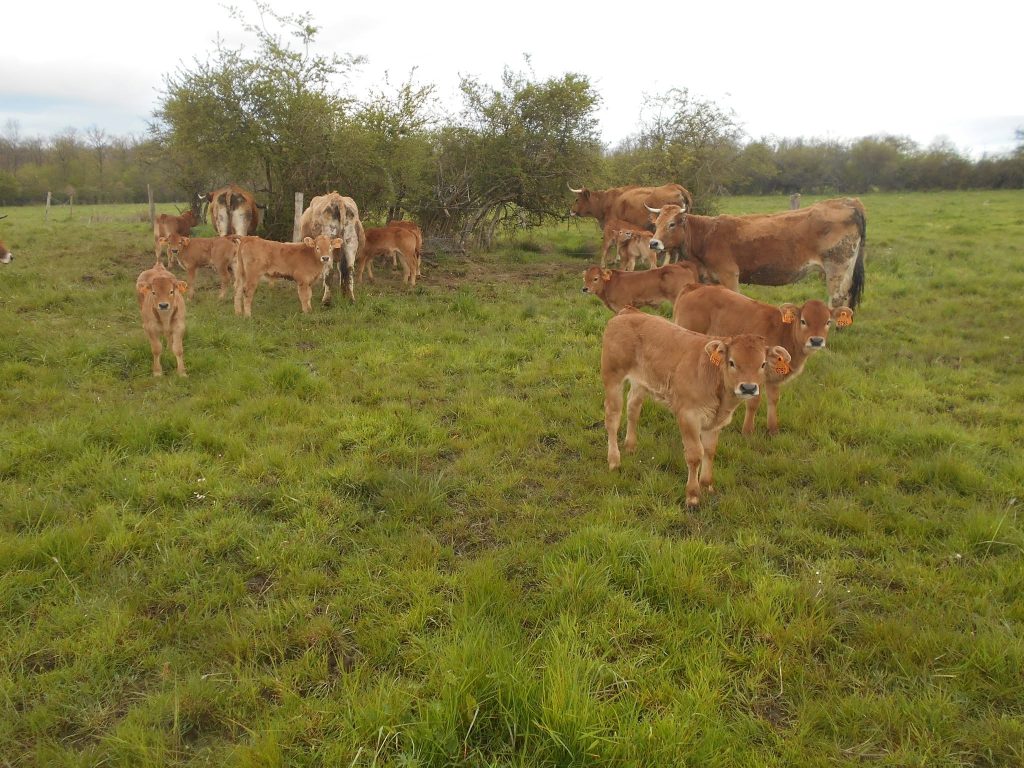
We spoke to Thibaut at the end of winter, when his days began with feeding the cattle: “In February all the cows are inside the stable so I give a little bit of cereal to the growing cows, then I give hay to all the animals. Then I put straw for their beds so they can be clean and I check their water.” His daily work as a farmer depends on the time of year: “That’s one of the wonderful things of our job. It’s changing every season, so we live in rhythm with nature. Now we have calving, the most important time of the year. Mortality mostly happens on a farm when calves are arriving, and for every 20 calving cows, I have to help two or three to give birth.”
The Vision for Agriculture and Food speaks of fostering a “competitive” agriculture sector, a further concept which is open to interpretation. Thibaut mentions that young male cattle stay on extensive farms stay longer compared to intensive systems. As for the cows, “some stay for at least 10 years on the farm, they have a name, they are part of family, and we only say goodbye when they are more than 10 years old.”
It is possible that that slower maturation may be interpreted as less “competitive” than intensive farming, but in terms of fulfilling a wide range of the social, environmental, resilience, and animal welfare aims contained in the Vision, agroecological farms are highly competitive; and the European Commission would be well advised to learn from the solutions developed on agroecological farms and supported by European customers.
Thibaut and his young family enjoy the broad positive impacts of extensive farming, in terms of biodiversity, lifestyle, economic engagement, and reducing climatic footprint. He takes pride in the fact that “20% of the meadows of farms which are both organic and extensive, so agroecological, have a high value of biodiversity. It’s incredible, when you see that natural reserves make up less than 1% of the territory of Wallonia, but that farmers who are both organic and extensive produce land which is 20% of high biodiversity value.”
Extensive farming also enables farmers to have a little bit more time for their families, and Thibaut sells the meat both directly to his customers and through Le Comptoir Paysan, a cooperative shop established with six other organic farmers in the small city of Beauraing. As well as being certified organic, his meat carries the label of the environmental NGO Nature & Progrès.
“We don’t want to have agri-bashing all the time” he says. “We want to be recognised for the food we produce, and the quality of this food, and for our role in terms of climate and biodiversity. It’s very important to maintain a rural life that can give a place for all these things.”
The topsoil of his farm and of his region is thin, turning quickly to rock beneath the surface, and that infertility was partly what drew him to animal farming in the first place. “You cannot produce anything other than livestock on this grassland of my region, and if we don’t do that, we will have forest. It’s then a question of how you produce protein: if you cannot produce it on these meadows then what are you doing? Importing.”
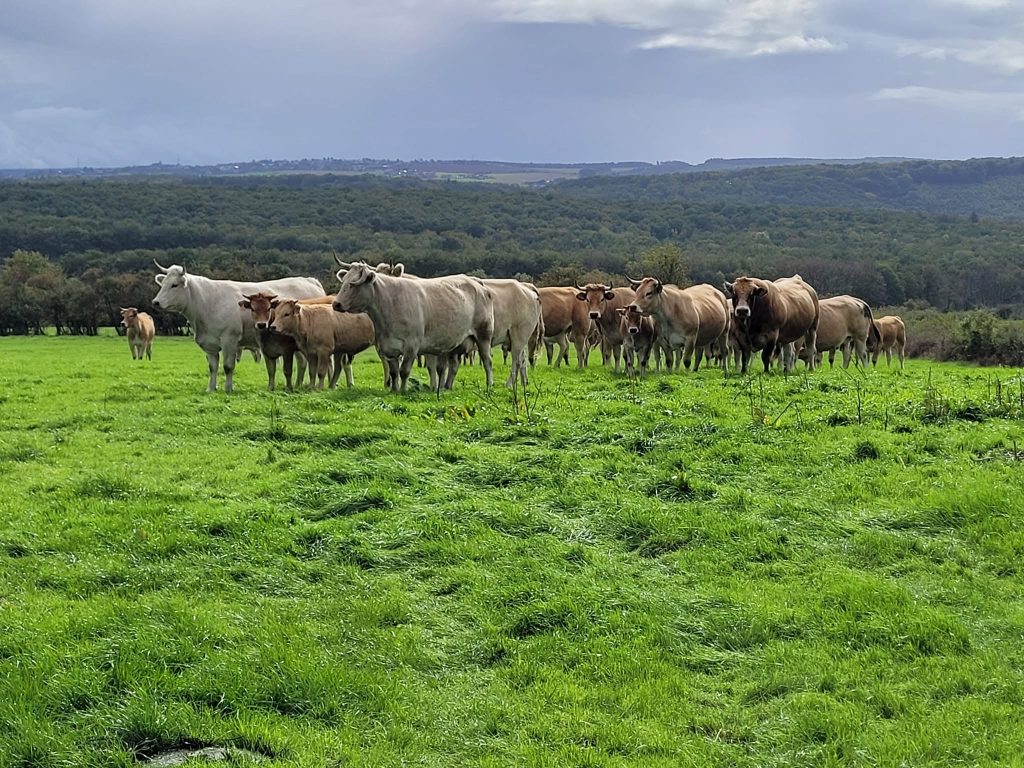
Experiences like those of Thibaut Goret suggest that the future of livestock farming in Europe does not have to follow the path of ever greater intensification. Agroecological farms are reviving systems that by relying on grazing and local feed are working with ecological processes rather than against them. These approaches show that livestock can still play a valuable role in rural economies, climate change, and food cultures, but scaling up such models will require more than individual initiative.
Policy choices — particularly in the next reforms of the EU’s Common Agricultural Policy — will help determine whether agroecological livestock systems can flourish. As highlighted in Agroecology Europe’s position paper A Fair Transition of Livestock Systems through Agroecology, the challenge is to rebalance production with ecosystems, close nutrient cycles, and ensure farmers are fairly rewarded for the public goods they provide.
The transition is already underway on some farms. The question now is whether policy will move with it.
Interview conducted and article written by Robin Llewellyn.